You know why it was so hard to lose weight for twenty-plus years?
My slow metabolism I needed solid information about food.
- What foods make it simple to have a healthy weight?
- What am I eating that my body has to store?
- How can I have sweets without bingeing?
People have been eating since there were people–we've only had problems with societal weight gain since the 1960s. Since then, the rate of obesity has steadily grown, and we are now approaching half the population.
That used to include me.
It was only when I ended my reliance on dieting that I was able to see more clearly what was going on.
It's the food. And to that end, food processing. Meaning, what we do to unprocessed ingredients to make them palatable. Which in and of itself isn't a problematic thing. There's a lot of confusion about that.
Enter the helpful dietitian.
Dietitians on social media try to tackle larger issues surrounding food (and shill for food companies) and occasionally do a decent job. Here, The Nutrition Tea is defending food processing.
So far, so good.
Food processing is neither good nor bad. It's a neutral term that describes beneficial and harmful ways a food is altered to make it palatable or edible. That's it—no more, less.
Cooking is a process, and so is assembling potato flakes with sugar and weird chemicals to make a 'chip.'
She rightly points out that canning a food, or preserving tomatoes in a box, still produces food with good nutrition. It just makes these ingredients shelf-stable.
I agree.
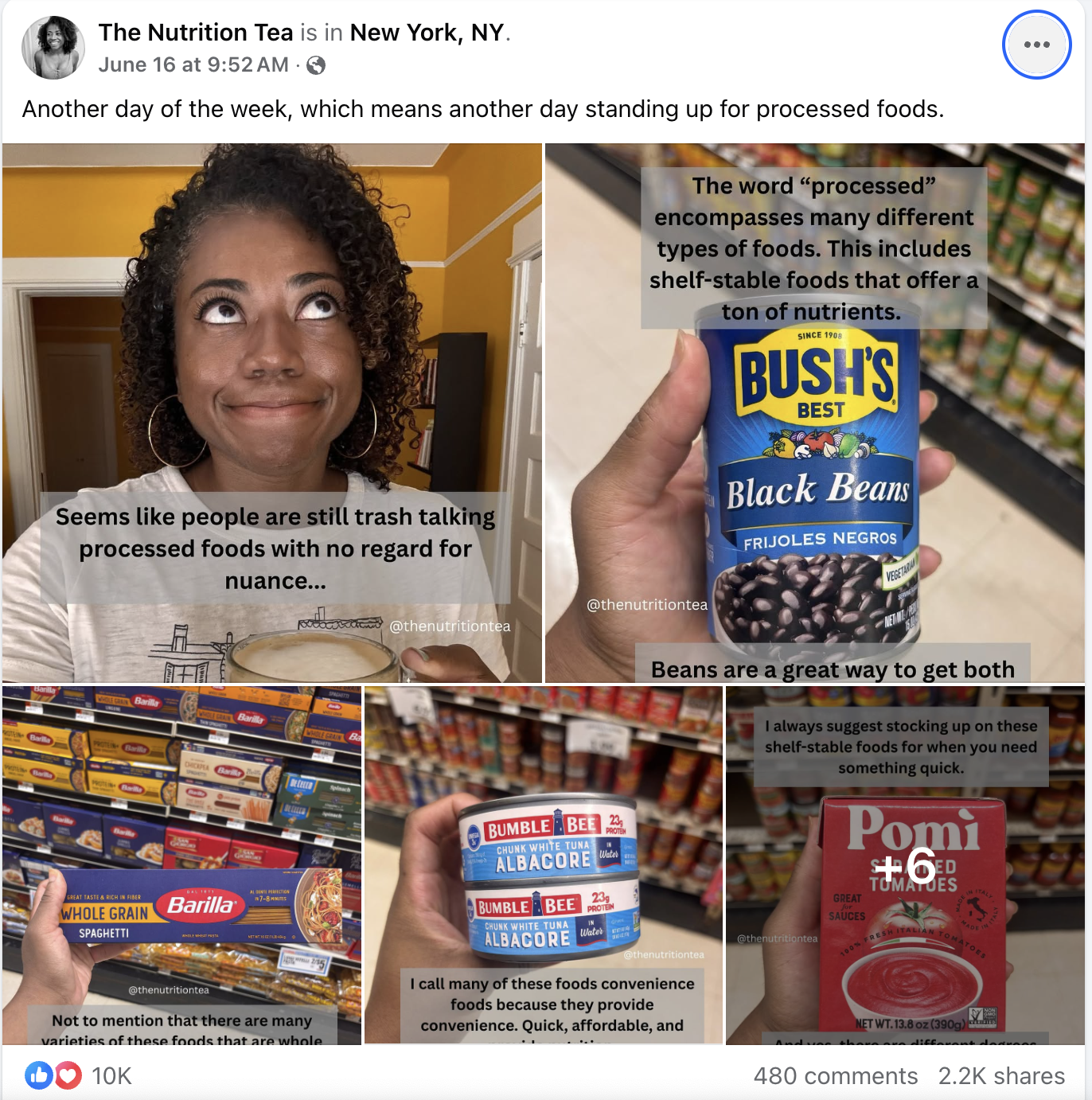
Tinned fish, canned beans, and boxed tomatoes are still intact, whole foods. I keep them all on hand so I can make real food meals. Canning was invented 200 years ago for precisely this function. To give us access to food beyond its seasonal availability.
I take issue with the high salt content in canned beans, but they are still beans. Eating more beans is a brilliant thing to do, and that's why I devoted a whole chapter in COOK! to them. They are a healthy weight powerhouse, great in canned, dried, or fresh forms.
Where she goes awry is lumping in instant oatmeal and pasta with these structurally intact foods. One could do much worse than eating either of them (like the entire frozen foods section), but if you're trying for a healthy weight, these foods will make that harder.
Let's separate the wheat from the chaff so you can quit consuming things that work against your healthy weight.
That was a food processing joke in case it wasn't clear.
Instant oatmeal does, of course, have some nutrition. It's not an ultra-processed food, but to make it instant, portions of the fibrous chaff are stripped out. That changes how your body receives it, making it more bioavailable.
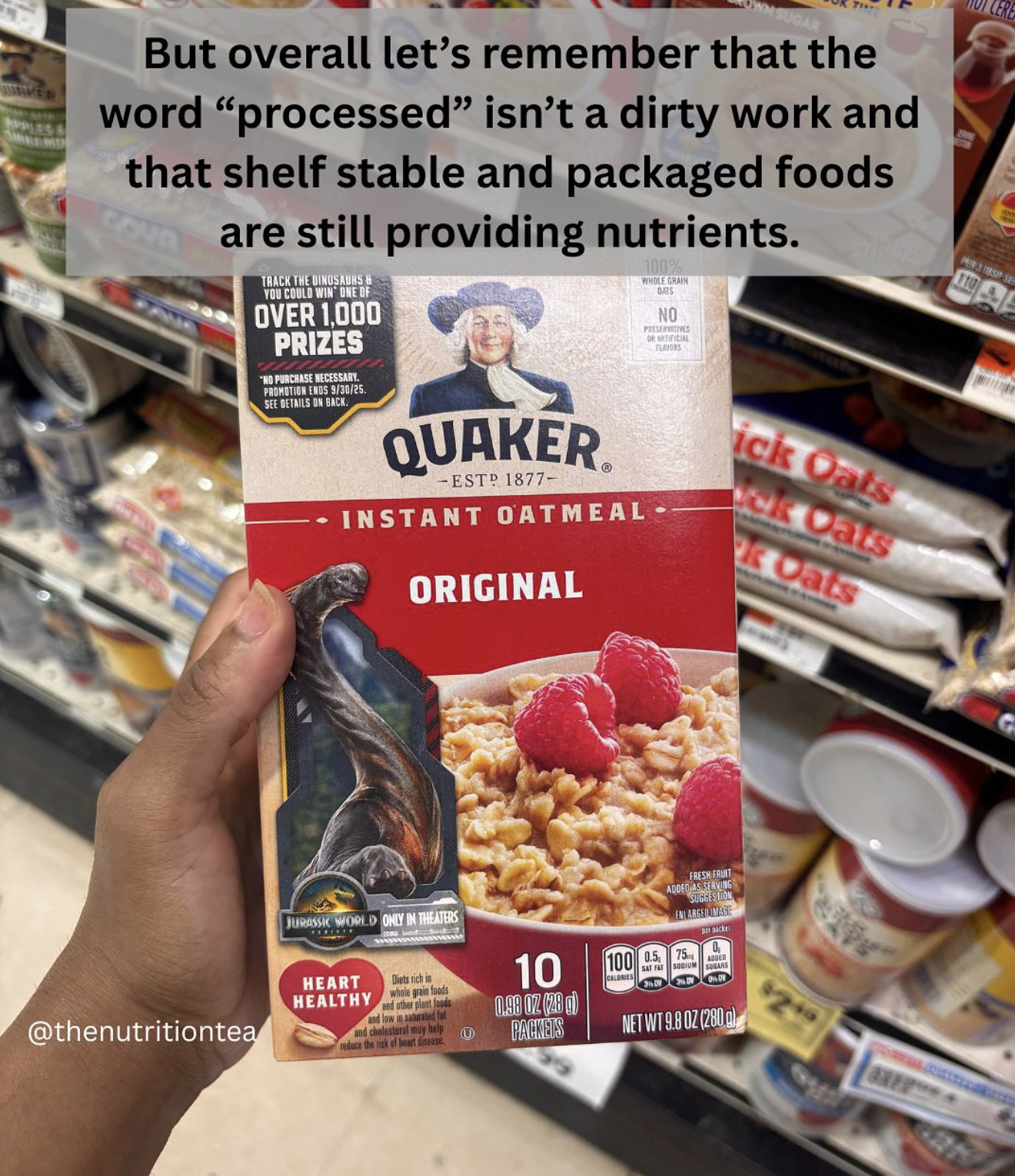
That's a pretty heavy price to pay for shaving 2-3 minutes off your cooking time. Regular oats are easy to prepare as is.
If I were consuming oatmeal on a long bike ride or at a camping spot with limited access to food prep, this product would make sense. Without that, it's a food that's unnecessarily broken down before entering my body.
Let's talk pasta.
Again, one can do much worse than making pasta at home. However, you're here because you want to have a healthy weight while still eating well. That means having some discernment over how a food is processed. Pasta (like bread) comes from flour.
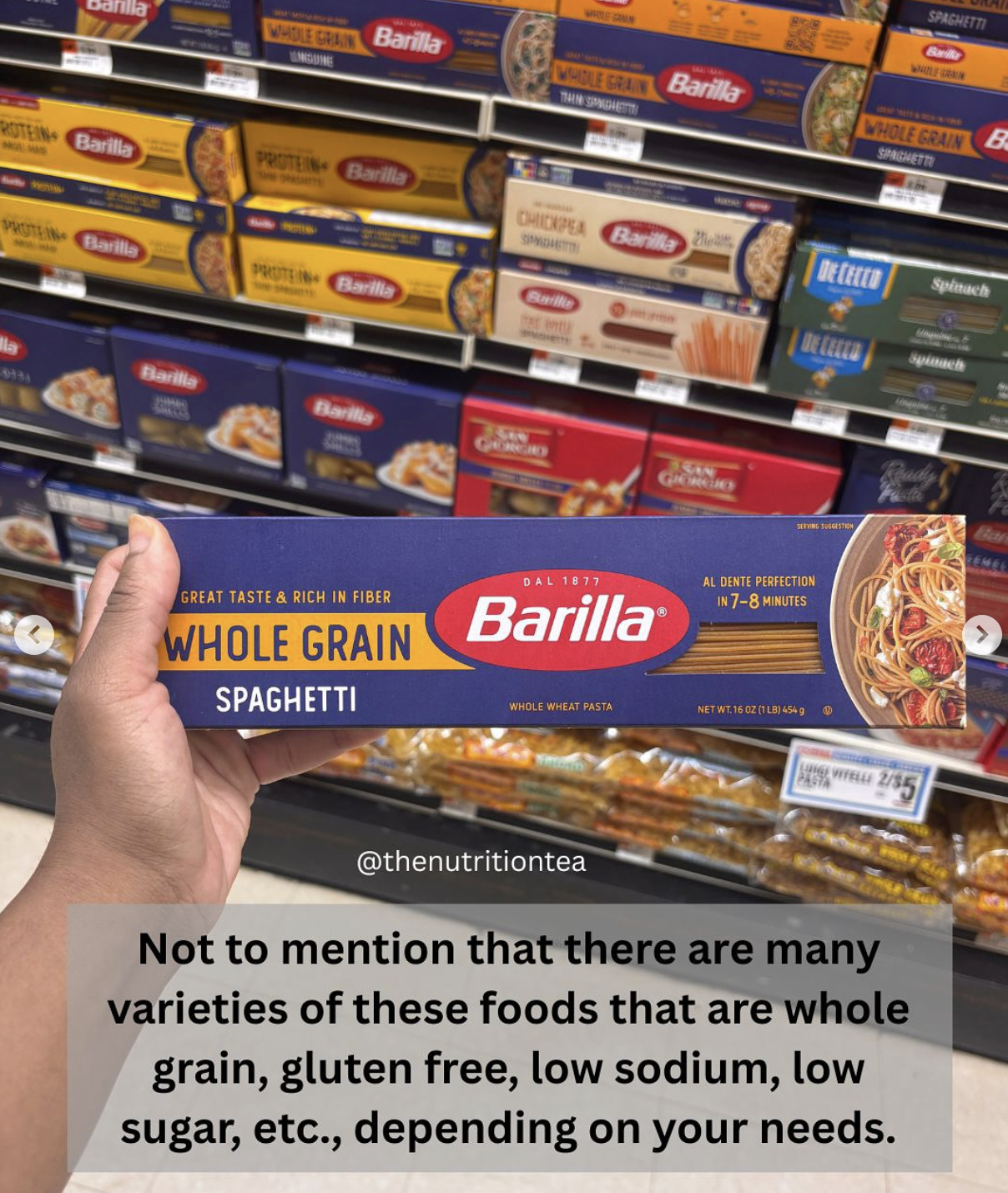
Even if you start with a whole grain, pulverizing it into a flour makes the calories far more available, which was the entire purpose of pasta when humans invented it.