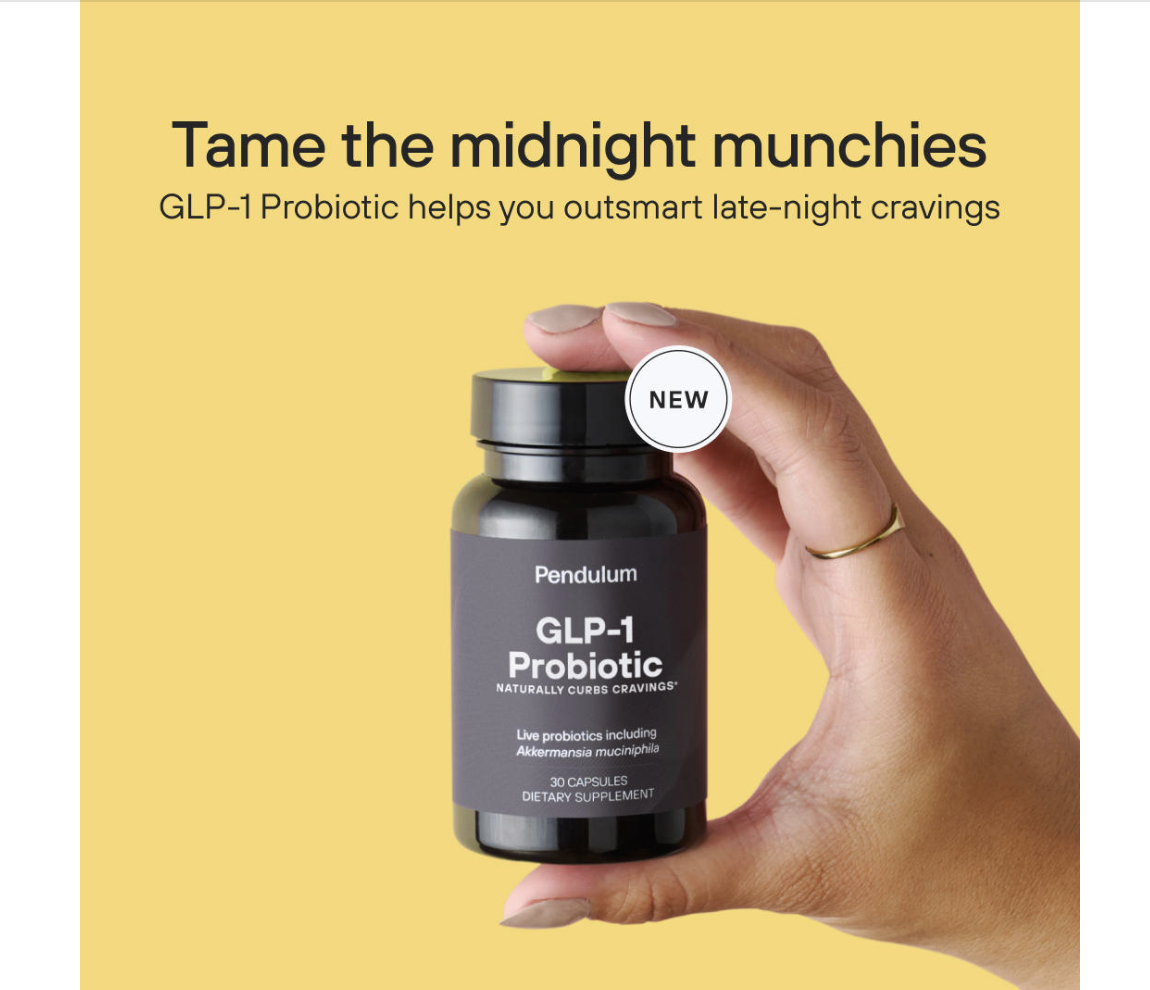
A reader asked, "I keep coming across ads for this brand of supplements and can't help but wonder what your thoughts are."
Well, here they are.
But first! I've made today's premium newsletter free to everyone. Please consider joining as a paid member. It's $12 a month for the information and perspective it took decades to perfect. Join here ⬇️
 |
Onward.
The relevant marketing language is: "This multi-strain probiotic is formulated with beneficial bacteria that naturally increase GLP-1,* the “un-hunger” hormone that helps curb cravings and appetite."
Sexy promise.
Here's the problem: There isn't a shred of evidence that anyone has been able to narrow down a strain of probiotics that acts in a particular way or can promise a specific outcome. In this case, increase a satiety hormone called GLP-1. This company has hopped on that hormone, hoping to get some of the shine emanating from semiglutides. I think that shine is temporary, but that's a subject for another day.
Here's what the NIH says:
However, in most instances, we still don’t know which probiotics are helpful and which are not. We also don’t know how much of the probiotic people would have to take or who would be most likely to benefit. Even for the conditions that have been studied the most, researchers are still working toward finding the answers to these questions.
 |
TLDR: Science is far from developing a strain that effectively addresses 'cravings.' Physiological responses are varied, and the idea that one pro-biotic would solve a complex issue is wellness nonsense.
The nonsense is seductive because how to take care of yourself properly feels murky.
Meaning, your investment in time and money needs to go to the essentials.
- How to select healthy foods (scroll to the end for more).
- How to prepare them at home.
- A willingness to move sufficiently.
- Patience to accept and strive for incremental progress.
- Protecting your sleep.
- Acceptance that all of this requires time each day.
If you find yourself being pulled in by this kind of marketing, ask yourself three questions:
- What keeps me from the daily care required to feel good and control my food choices?
- Why am I dismissing improving diet quality as a remedy?
- Is the sugar I consume throughout the day causing cravings, and how can I be more aware?
Right.
The truth is that cravings are caused by triggers you're unaware of. Curiosity about what you're consuming and how you're feeling will most likely reveal two things: You're eating a lot more sneaky sugars throughout the day than you think, and you're accustomed to soothing yourself with obesogenic food (because everything in culture encourages it).
Now, what are the chances an unproven probiotic can handle both of those things?
"What can it hurt?" Quite a lot.
It's a time and money waster for starters. If their testimonials are real, that speaks to the temporary placebo effect and not any lasting change. Yes, the placebo effect is a real thing, but not an enduring one.
The issue is that taking this could result in papering over the actual issues at play. There's no need to do the deeper work; I'm taking this supplement!
I would tell you that putting off the work of sorting through what's actually happening is selling yourself short on the life and body available to you.
What works.
Would it surprise you to learn I never take probiotics?
I'm not opposed to them, but I learned long ago that if you eat real food, your gut naturally rights itself. Whole and unprocessed foods like veggies and beans encourage the growth of good gut bacteria.
In other words, is your food helping your body help itself?
One super way to start encouraging good gut health is TO EAT BEANS. Sorry for shouting, but I can't tout this food enough for all things related to health and weight. That's why a chapter is devoted to this beautiful legume in COOK!
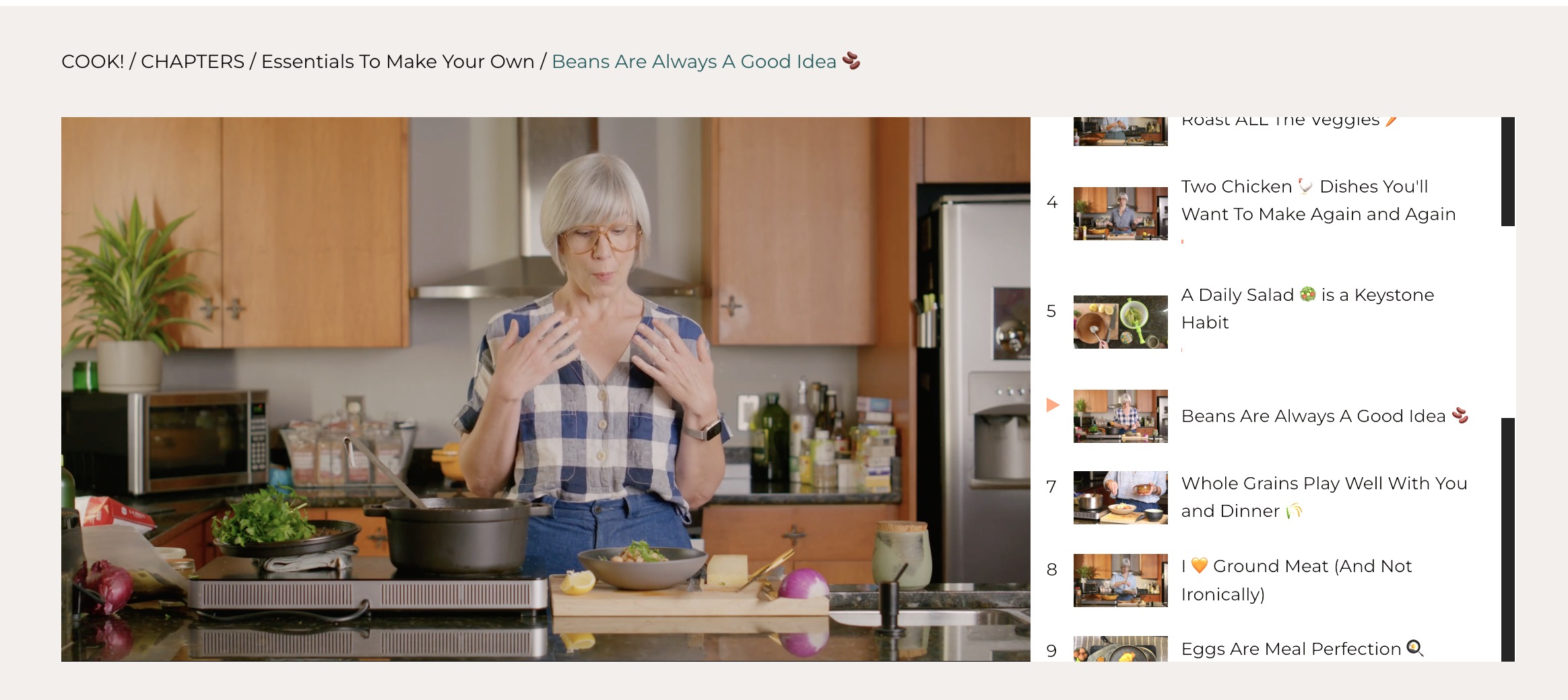
Any real food will help your gut health, which helps you feel good, which helps you sleep, which helps you get out and move, which then curbs 'midnight munchies.'
Your health is holistic. You are a whole being.
I have a question for you.
Do you know how to select healthy foods, or does that process feel murky?
Picture this: you're walking through the grocery store, and this new thing is displayed. It looks good, has a nice label, is "plant-based," and is next to some apples. You pick it up and think, "Is this healthy?"
|

That's exactly what my business bestie and I discuss in this 7-minute video on food processing. She's sharing how my framework changed her thinking and life. Big stuff!
💡 Here's the 'secret' to my healthy weight. I eat 80% in the first two categories and 20% moderately processed. That's it. It's what's kept me from dieting all these years. I use this framework I've developed to keep my food choices in the first three categories.
But my question to you is, as you go through the grocery store or peruse a menu, can you tell which category a food belongs to?
- Whole and unprocessed. This is food as ingredients as close to its original state as possible.
- Heritage foods are those with beneficial processing that have a long history of use in human eating. Think butter, miso, etc.
- Moderately processed food has been significantly altered from its original form but still uses quality ingredients and is free of palatability chemicals.
- Highly processed are generally assembled from a variety of significantly altered ingredients and multiple types of sugar. This is an obesogenic food.
- Ultra-processed foods are far removed from their origins as food. Their defining feature is that they contain palatability chemicals and are designed for rapid consumption. These foods represent 56% of the American diet and are dangerous to human health.
Here's my thought: I'm considering using this newsletter to teach you each aspect of these categories so you can use my framework to improve your health and waistline. How can you progress if you can't accurately assess what you're buying?
Are you into it? Let me know.
Thank you for being a paid subscriber to How To Never Diet Again.
My mission is to end generational diet culture by making a healthy weight clear and achievable. This newsletter tackles the tricky business of navigating an obesogenic world in an ancestral body.