Here's how I'm handling it.

I had a staycation sort of summer. There was loads of bike riding, fig-picking, pizza parties, splashing in the river, late dinners, pastry for lunch, tacos after mountain biking, and other assorted activities, often back-to-back.
I threw caution to the wind because sometimes it feels good to shed your constraints. I want to be this for now. At least, I think that's what happened. There was some self-soothing as well.
It was easy to fool myself because I was incredibly active (more on that below). Suffice it to say, diet (what you eat, not dieting) is and always will be the most critical part of having a healthy weight.
💡This edition unpacks how and why my daily behavior changed (with weight as the outcome) and what measures I'm undertaking to right the ship without restriction, cleanses, or fasting.
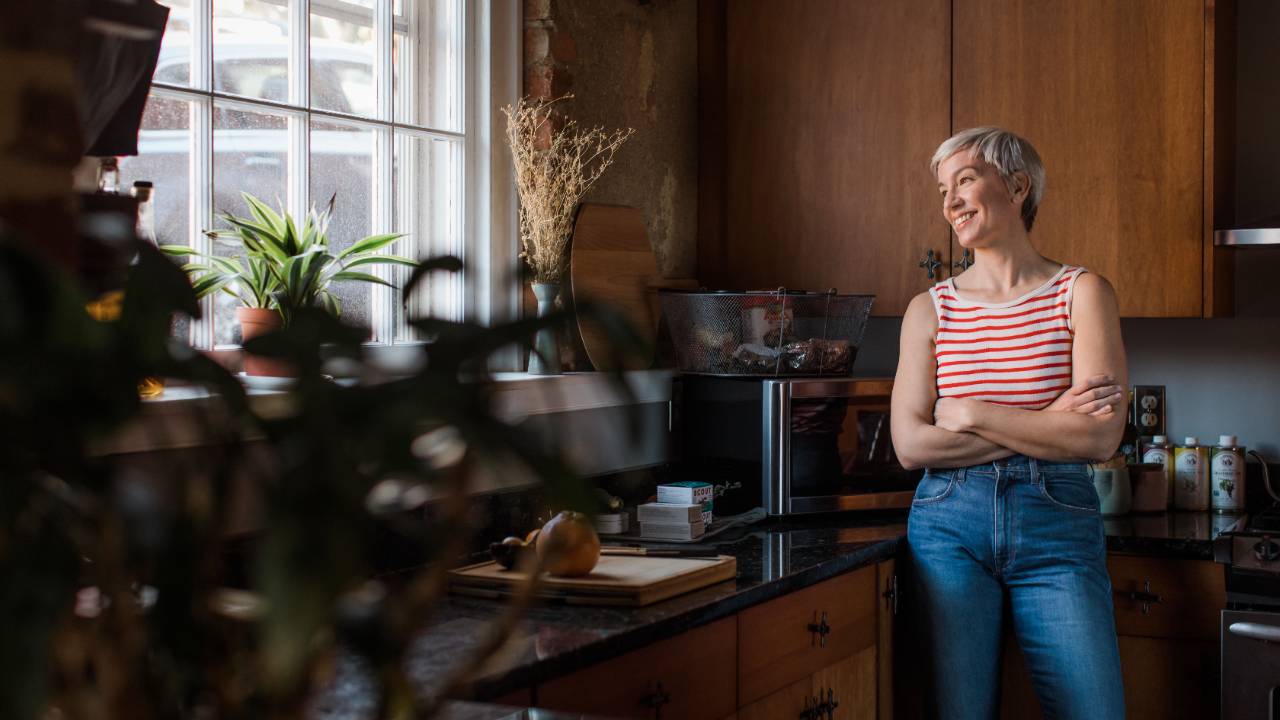
This is what I look like right now⤵️

Four-ish pounds doesn't radically alter how I look. It's made my no-stretch pants tight, which I don't love, but I mostly look like myself.
Conventional wisdom would say this is no big deal, bodies change, and who cares? Well, me. I say it's an issue because it represents the slippery thinking that leads to years of weight gain.
The 55 pounds I originally lost came on 5-10 pounds a year.
That's all excess weight ever is–an accumulation. More broadly, it's the product of daily actions triggered by your internal (emotions, personal difficulties, depression) and external environment (relationships, household, workplace).
Nipping accumulation in the bud is essential. The issue is somewhat about appearance but much more about well-being. Keeping a healthy weight helps prevent breast cancer recurrence. After two bouts of cancer, I made a simple pledge that I would do everything I could to prevent another one. Weight care is part of that pledge.
I also feel better when I'm a bit leaner. That counts, too.
What I'm not doing about it.
No apps, calorie-counting, going hungry, fasting, or strenuous workouts to 'burn' fat (or whatever). I will not buy stretchy pants or any new clothes.
I won't fall into the trap of thinking this is a huge problem that now requires a restrictive solution. This is what self-convinces people to diet. I'm out of control! I need to be good! None of that is necessary or helpful.
I wasn't bad. I just let go of my guardrails. A better question is, why?
|
Curiosity about what changed is where to begin. Weight is the result of multiple, quiet environment choices that affect mood, time, sleep, and what food is available to me.
- What have I been buying or eating with frequency?
- Has there been a lot of eating out?
- Is this a period of stress? If yes, am I adequately supported?
- How's my hunger? 🚩
- Did something disrupt sleep?
- Am I socializing with a new person (with different habits) or in a new way?
- What am I doing more and less of?
- Do I need to get my thyroid checked? I have a low-performing thyroid and take medication, but what the body needs can change over time.
💡It's no surprise that when I got curious about what happened, there were clues galore as to how and why I was overeating–and I was. Being active isn't a fix for eating beyond need, but identifying what's driving my eating is.
Step one is to nip recrimination in the bud.
It's not helpful and probably not true.
Shame isn't useful; it's self-defeating. It makes us hide and deny, which thwarts curiosity and gentle action.
You can acknowledge the need to lose weight without downgrading yourself. I'll go first. I'm an excellent woman of any weight.
If you struggle with shame and poor self-talk, the fix isn't to lose weight; it's to push back on that internal dialog until the narrative changes. You simply can't make progress with someone (you) downgrading your efforts at every turn.
Address that, then you can enact the self-care practices and boundaries necessary to have a healthy weight. I did that years ago when I finally woke up to how bad my internal dialog was. It's deeply important work.
 |
The next step is to stabilize.
It's tempting to go hard at weight gain and handle it immediately, but bodies don't like big ups and downs. One of the first and best things is to support internal and external calm without putting pressure on my body to lose. It takes a moment to unwind new habits which is a great opportunity to employ curiosity.
I'm taking measures (more below), but the step before losing weight is to allow my body to just be. I need physical and mental calm to sort through why things changed these last few months and what I can specifically address to get back to my stable weight.
How was I fooling myself?
I was ridiculously busy and active. I hiked, swam, and pedaled like crazy, and I walked between 5 and 7 miles a day. That disrupted my schedule, which meant eating at weird times with whatever I could get my hands on. I often walked in the door ravenous and bought food. I could feel that the volume of my eating had gone up, but I reasoned that it was fine.
It wasn't. I often ate a significant volume without planning because I wasn't used to being so hungry. I never stopped to consider that some of this hunger was in response to the cortisol my body was producing due to constantly pushing myself.
It also allowed me to be slippery with all the social engagements. I'm moving so much! It's fine! I know very well that how you socialize greatly affects weight.
💡 As I say in my podcast, you don't have free will; you have agency. That means I can't choose to be unaffected by my environment but can choose what environment I put myself into.