It probably is. This edition is devoted to helping you spot one and understand why this matters.
Last week, I taught an in-person cooking class, and one of the young women in attendance told me about her membership in a no-diet weight loss class that, wait for it, has members tracking all their food.
Umm, that's a diet. No matter the rationale for food tracking that automatically makes it a diet. Yes, awareness about what you're eating is critical, but that's not actually the goal the goal of logging your calories/macros/portions.
It's to suppress your eating.
If you're on my list, you've probably participated in a few food suppression schemes (what diets ought to be called). So, my question to you is, what happens after the last day of creating 'awareness'?
🤔
😵💫
🫠
You slowly and surely return to your old eating patterns, and the weight gain follows. If awareness through food tracking was such a powerful tool, why doesn't it stick?
Because your eating patterns result from the food you choose, how you manage your hunger, what socializing you engage in, and how you self-soothe.
And that, my friend, is why the weight comes back. Your personal environment is setting your weight, and that's what has to be addressed.
If your mind is a little blown right now, good!
Healthy weight loss focuses on patterns of consumption, identifying real food, sleep, embracing hunger, socializing differently, setting boundaries around your time, and learning to deal with emotions differently.
Put another way, which diet have you done that helped you with those things?
Et, voila.
So, what is a diet?
As you know, I spend a lot of time removing complexity from health-oriented subjects. Diets aren't an answer to weight gain; they are the beneficiaries of a food system run amock.
So, here it goes for what makes something a diet:
A diet is a scheme that suppresses your eating through temporary measures.
What are those measures?
- Apps/food tracking or calorie counting.
- Meal plans that remove all the work of choosing food and getting in tune with your hunger.
- Carb restriction: you eat much less.
- Fasting–time is the device.
- 30-day challenges have an end date built-in.
- Intense exercise your body isn't ready for.
And so it goes. None helps you understand your hunger or how your environment and food trigger overeating. But that's where the issues are!
The goal is the goal weight; success is measured by forcing your body to comply with that number.
If that sounds awful, that's because it is.
How to work with me:
- Learn intuitive, real food cooking–without recipes, gadgets, or hours of prep 🥑
- APPLY to the Lose Weight Without Dieting LIVE cohort beginning in February
- Take my sugar course 🍭
- Individual coaching sessions (one or three).
|
My final weight loss began the day I set down dieting. At the time, I had no idea what would work, but I wanted to be free of the cumbersome systems I kept trying and failing. That was day one of my liberation.
When you stop trying to force one of these schemes to work, it opens the door for deeper, more lasting work.
That's why it's crucial to identify a diet. It protects you from being pulled into something that has no hope of creating real change. It's more performative. How long and how well can I do this thing until you can't?

Step one of lasting weight loss is to spot and exit a diet.
You might be on one right now. Studies show that diets beginning January 1 last until February 15, max. That ought to tell us something. How can you find sustained success through methods that don't endure? You can't, of course, but the myth of temporary calorie deficits keeps people returning to them–repeatedly. Heck of a business model, but not great for you.
Toggling between a life that puts weight on you and suddenly forcing your body into deficits is what experts call weight cycling.
Weight cycling is one of the few ways you can damage your metabolism. Not age, not being a woman. Weight cycling.
So, my question to you is, when you think back on the things you've tried to lose weight, were they diets, and what device was used to suppress your intake?
Leave me a comment and share it with others.
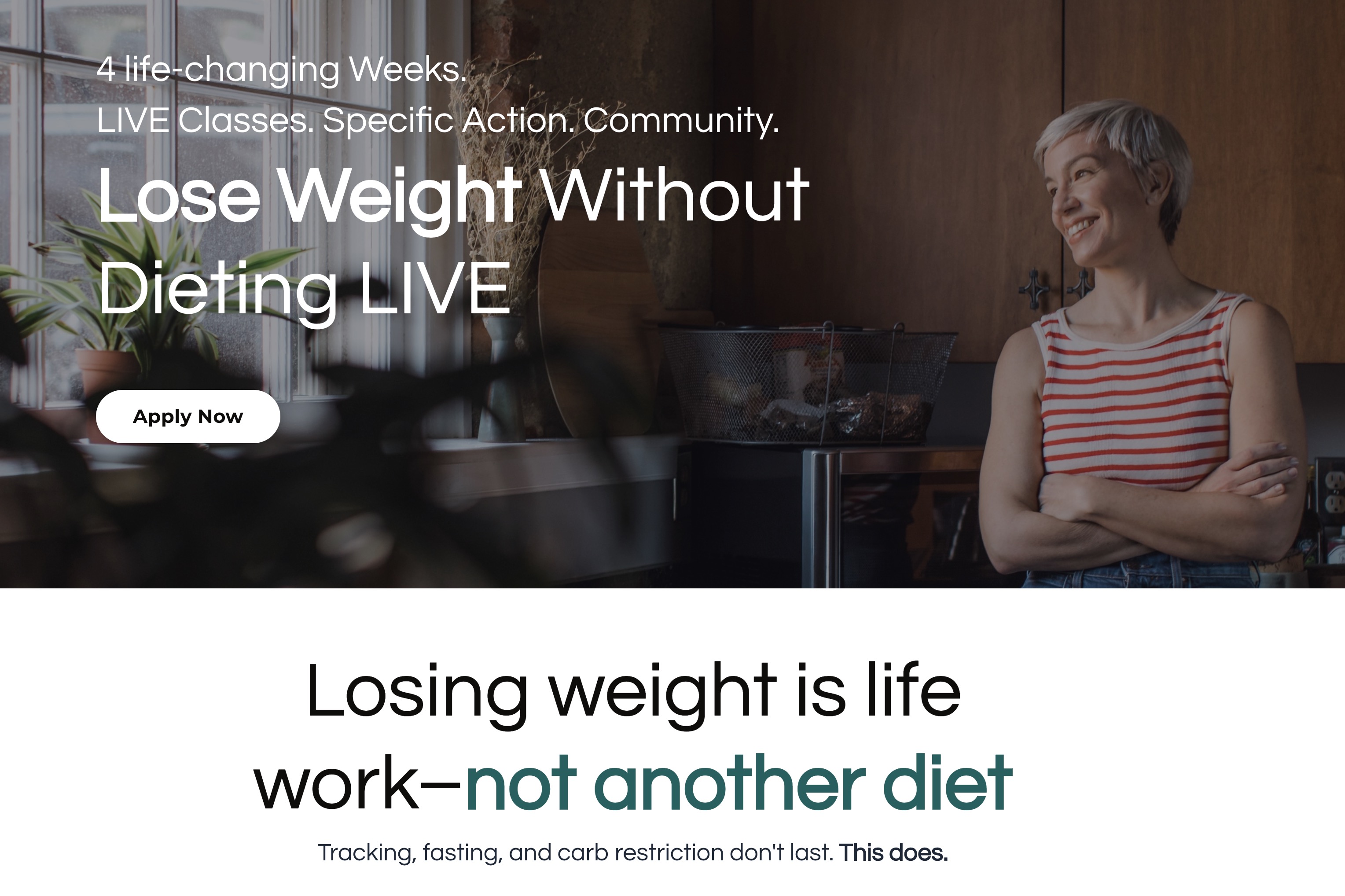
It's a myth you need to go into a 'calorie deficit' to lose weight. Or, frankly, even think about food as calories at all.
There are much healthier, joyful, and long-lasting ways to change your eating (and therefore your weight), and I'm teaching them in four LIVE sessions with loads of time for talking it through and community support.
Stop blaming your body and learn to work with it. Doesn't that feel better?
Click on the photo for more information and my consistently stellar testimonials.
Help me thoughtfully build this community.
Send this email to a friend. They can sign up here ⤵️
 |
Yours in joyful eating and living,